

About The Site




Will We Make it to Here?
Share What You Know, Learn What You Don’t
Website Intent
Blockchain Britain exists for a reason.
While the subjects explored across this site are wide-ranging, they are united by a single underlying belief: that many of the challenges facing modern society are not inevitable—they are the result of systems that can, and should, be improved.
Blockchain technology, most commonly associated with cryptocurrencies, represents far more than a financial innovation. At its core, it offers a fundamentally different way of organising trust, transparency, and accountability in our institutions. Properly understood and responsibly applied, it has the potential to reshape how we govern, transact, and interact.
This site is built on the conviction that meaningful solutions require both clear thinking and a willingness to explore new frameworks. Blockchain is one such framework.
For that reason, a dedicated section of this site provides a comprehensive exploration of Blockchain technology, cryptocurrencies, and their practical applications. This foundation is essential—not as an abstract technical interest, but as a toolset for examining problems and identifying viable paths forward.
Many new technologies are rapidly coming into play across global society, reshaping how we live, work, and interact. Yet, alongside this progress, a concerning imbalance is becoming increasingly clear. Our growing mastery of technology is outpacing our ability to select and empower leaders who can use these tools wisely—leaders capable of applying them in ways that are effective, safe, and aligned with the broader interests of society.
Current world events serve to underline this gap. The systems we rely upon to determine leadership and deliver governance structures are showing their limitations. They were not designed for a world moving at today’s speed—where technological advancement, population growth, and widening wealth inequality are accelerating simultaneously. These forces are not merely evolving; they are compounding, increasingly slipping beyond the effective control of those entrusted to guide us forward.
At the heart of this issue lies a capability gap. The complexity of the modern world demands a new kind of leader—individuals with broader, more integrated, and more in-depth knowledge across multiple domains. Technical understanding alone is not enough; nor is political instinct. What is required is a synthesis of disciplines, experience, and perspective that reflects the interconnected nature of today’s challenges. Alongside this, there must be a rethinking of how such individuals are identified, selected, and held accountable.
Equally important is the question of motivation. Existing systems often reward those driven by self-interest, ambition, or the pursuit of power itself. This creates an inherent tension at the core of leadership selection. As Douglas Adams wryly observed in The Restaurant at the End of the Universe, “anyone who is capable of getting themselves made President should on no account be allowed to do the job.” Though humorous, this insight reflects a serious and longstanding philosophical concern—one that echoes the thinking of Plato and, more recently, Robert Greenleaf. The very qualities that enable individuals to attain power are not always those that make them suited to wield it responsibly.
If this is the case, then it follows that incremental change may not be enough. Instead, we may need to consider fundamentally different models of leadership and governance. One such possibility is the development of a rotating pool of polymaths—individuals selected for their breadth of knowledge, depth of understanding, and capacity for balanced judgement. From this pool, leaders could be chosen for defined periods, reducing the consolidation of power while ensuring that governance remains informed by a wide-ranging and evolving expertise.
Such ideas point towards a broader conclusion: that meaningful progress may require us to rethink our systems at a foundational level. This is not simply about improving existing structures, but about questioning the assumptions upon which they are built. New paradigms of thought may be necessary—frameworks better suited to a world defined by rapid change, complexity, and interdependence.
The alternative is to continue along a path where technological capability accelerates without a corresponding evolution in governance. If left unaddressed, this imbalance risks carrying us further down a road that becomes increasingly difficult to correct.
This is not simply a discussion. It is an exploration of how things could work better.
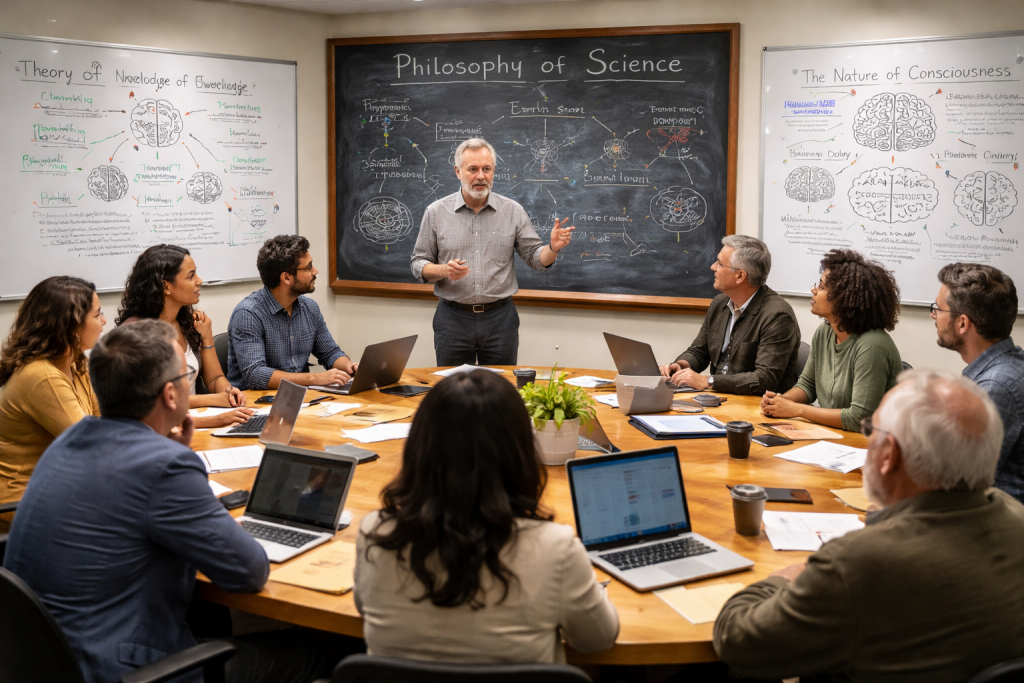
I hope this Site will serve as a potential meeting place and discussion centre for such polymaths, and the intent is to develop the site as needs arise to encourage these broad thinkers to develop and increase their capabilities.
Testimonials
Client Feed Back

Gordo Thomson
USA, Florida
Efficient and Reliable
Our clients’ words speak volumes. Explore testimonials from businesses that have transformed their operations, achieved remarkable results, and built lasting partnerships with us.


Gordo Thomson
USA, Florida
Efficient and Reliable
Our clients’ words speak volumes. Explore testimonials from businesses that have transformed their operations, achieved remarkable results, and built lasting partnerships with us.